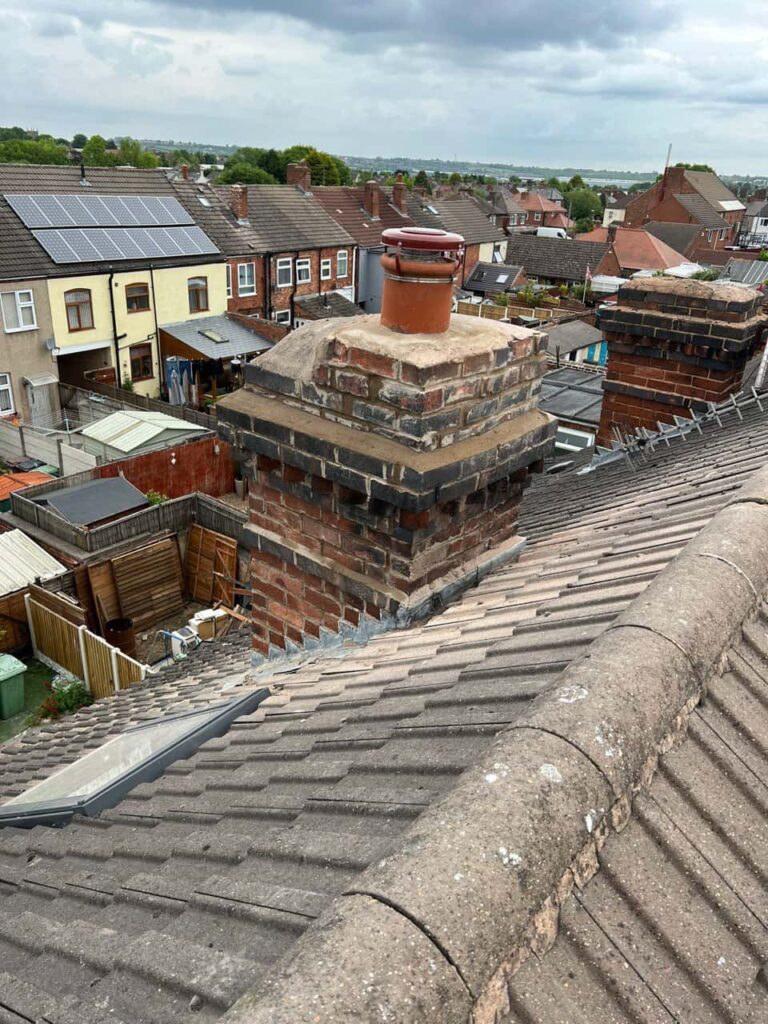
A roof may withstand one storm without showing any obvious damage. However, repeated periods of strong wind and heavy rain can place increasing strain on tiles, fixings, flashing, mortar and drainage components. Minor movement caused by one event may become a more serious weakness during the next.
Damage is not always visible from ground level, and a roof does not need to be actively leaking to require attention. A professional inspection can identify developing defects before further bad weather allows water to enter the property.
How Repeated Storms Can Affect Your Roof
Storm damage is often cumulative. Each period of severe weather can weaken components that were already ageing, weathered or slightly displaced. Inspecting the complete roof helps establish whether it remains secure and weather-resistant.
Tiles and Slates Can Gradually Become Loose
Strong winds create pressure above and below roof coverings. A tile or slate may lift slightly before returning to a position that looks normal from the ground.
Repeated movement can weaken nails, clips and other fixings. Eventually, the covering may slip, crack or detach completely. Even a small change in position can create a route for wind-driven rain.
An inspection can identify displaced components and check whether surrounding tiles or slates have also been disturbed.
Small Cracks May Be Difficult to See
Not all storm damage involves a missing tile. Roofing materials can develop fine cracks after being lifted, struck by debris or placed under repeated stress.
Water may enter through these openings during prolonged rainfall, particularly when strong winds force it beneath overlapping materials. Because the crack can be narrow and located high on the roof, it may remain unnoticed until dampness appears indoors.
A close inspection allows the affected component and the area around it to be assessed properly.
Ridge and Verge Components May Weaken
Ridges and verges are among the most exposed parts of a pitched roof. Repeated wind pressure can loosen tiles, crack mortar or weaken mechanical fixings.
Deteriorated mortar may begin to crumble, leaving components with less support. A ridge tile does not need to move visibly for the joint beneath it to admit water.
Checking these areas after repeated storms helps establish whether localised maintenance or repair is required.
Lead Flashing Can Lift or Split
Lead flashing protects vulnerable junctions around chimneys, adjoining walls and other roof details. Wind can lift an already loose edge, while repeated movement may contribute to cracking or separation.
Once flashing no longer sits correctly, rainwater can travel behind it and reach the structure below. The resulting internal mark may appear some distance from the defect, making the source difficult to identify without a methodical inspection.
The flashing itself, its joints and the surrounding materials should all be checked.
Chimneys Can Develop Several Defects
Chimneys are highly exposed and contain multiple components that may deteriorate during storms. Flashing can loosen, mortar joints may weaken, and chimney pots or surrounding roof materials can move.
Water entering around a chimney may follow its surfaces before becoming visible inside the property. Treating only the internal damp patch will not address the external cause.
A roof inspection should examine the complete chimney junction rather than focusing on one component.
Gutters and Valleys Can Become Blocked
Storms can deposit leaves, moss, twigs and other debris into gutters, outlets and roof valleys. These areas are designed to move water away quickly, but blockages can interrupt that flow.
Water may then overflow, collect behind debris or spread beneath neighbouring roof coverings. On flat roofs, obstructed outlets can contribute to standing water and place prolonged pressure on weak joints.
Clearing debris is important, but the roof should also be checked for damage caused while water was unable to drain correctly.
Underlay May Become Exposed
Tiles and slates form the main external covering, while the underlay provides a secondary layer of protection. If the roof covering becomes displaced, the underlay may face direct exposure to wind, rain and sunlight.
Older underlay can become brittle and may tear around fixings or battens. Once damaged, it becomes less effective at directing incidental moisture towards the eaves.
Inspecting beneath visibly affected sections can reveal whether the problem extends beyond the outer covering.
Flat Roofing Can Suffer at Joints and Edges
Flat roofs rely on securely finished joints, upstands, outlets and perimeter details. Strong winds can exploit a loose edge, while standing water following heavy rain may reveal depressions or drainage weaknesses.
Repeated storms can worsen small blisters, splits or lifted seams. Water may then travel beneath the covering and emerge inside at a different point.
A professional inspection should consider the surface, edges and drainage system together.
Internal Signs May Appear Later
Storm-related moisture does not always become visible immediately. Water can enter in small amounts, soak into insulation or travel along timbers before reaching a ceiling.
Possible warning signs include:
- New damp marks or discolouration
- A musty smell within the roof space
- Moisture around chimney breasts
- Dripping during wind-driven rain
- Debris appearing around the property
- Daylight visible through the roof covering
- Changes in the roofline
An inspection remains worthwhile even if these symptoms disappear when the weather improves.
Why Ground-Level Checks Are Not Enough
A visual check from the garden may reveal a missing tile or obvious displacement, but it cannot confirm the condition of fixings, flashing joints, underlay and concealed drainage areas.
Attempting to inspect the roof without suitable access and experience may also result in damage to otherwise serviceable materials. Professional roofers can assess vulnerable areas systematically and distinguish storm damage from longer-term deterioration.
This allows repairs to address the underlying fault rather than only the most visible symptom.
Conclusion
Repeated storms can gradually loosen roof coverings, weaken mortar, damage flashing and obstruct drainage. Although each individual defect may appear minor, further wind and rain can allow the problem to spread into the surrounding roof structure.
Arundel Roofing Repairs can inspect storm-affected roofs in Arundel, Hampshire, identify concealed weaknesses and recommend suitable repairs. If your property has experienced repeated severe weather, contact the team to arrange a professional roof inspection.
Call us on: 01903 947 196
Click here to find out more about Arundel Roofing Repairs
Click here to complete our contact form and see how we can help with your roofing needs.